
Two decades. Multiple markets.
Real deployments.
Our team’s experience is not theoretical. Since the early 2000s, we have been building electronic signature infrastructure in Europe at a time when most organizations were still printing and scanning contracts.
The result is a team that understands the full picture: the regulatory requirements, the technical architecture, the integration realities, and the operational challenges of running a trust service at scale.
20+
Years in trust services
ecosystem
25+
solutions deployed across
EMEA
50+
Years combined expertise : cryptography, PKI, law, software
SPI-S v3.2 Core Capabilities
Three signature levels (SES / AES / QES)
Simple, Advanced, and Qualified Electronic Signatures : properly implemented according to ETSI standards, not approximated. Each level carries a different legal weight and is appropriate for different document types and jurisdictions.
Beyond individual signatures, SPI-S v3.2 supports electronic seals, allowing organizations to apply an institutional signature to documents on behalf of a legal entity, not an individual. Seals are used for automated document workflows, batch processing, invoices, certificates, and any output requiring organizational authentication rather than a personal signature.
Timestamps anchored to a Time Stamp Authority providing proof of the exact time a document was signed or sealed. The level of qualification of the timestamp depends on the infrastructure deployed. Essential for legal proceedings, audit trails, and regulatory compliance.
LTV-compliant signatures
Long-Term Validation (LTV) compliance ensures your signatures remain legally valid and verifiable decades from now even after the signing certificates expire. This is critical for contracts, deeds, and regulatory filings that must be enforceable long-term.
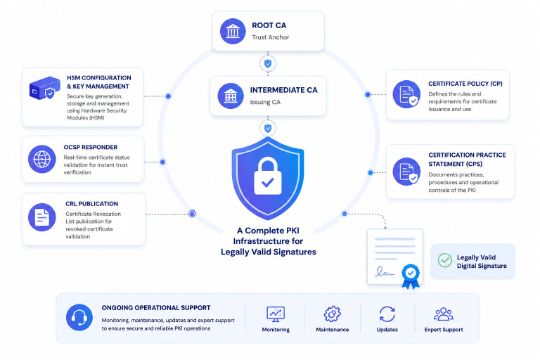
Full PKI infrastructure
Built on a complete PKI stack: Root CA, Intermediate CA, HSM-backed key management, and CRL publication all operated under strict CP/CPS policies.
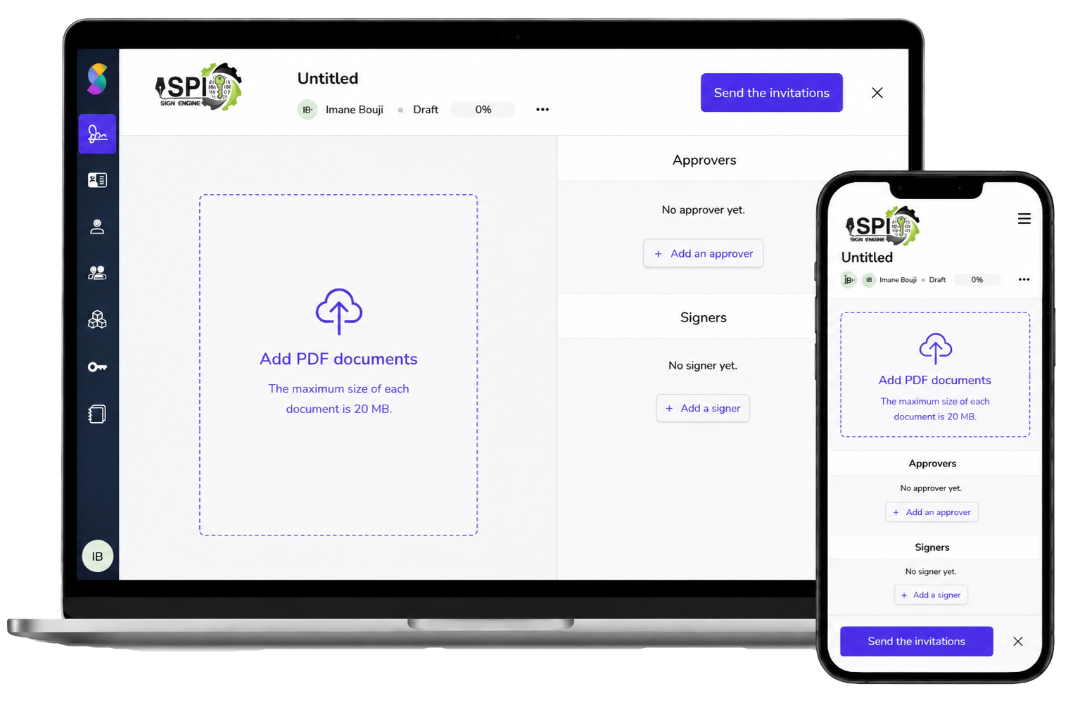
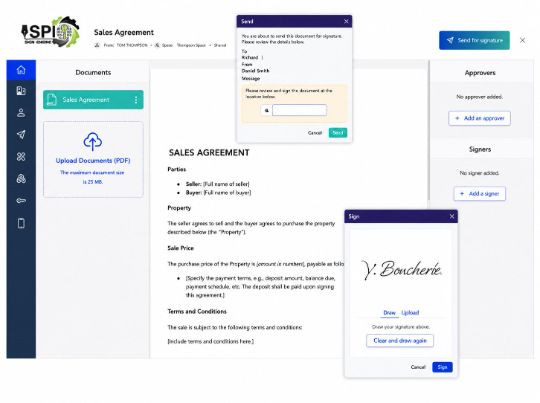
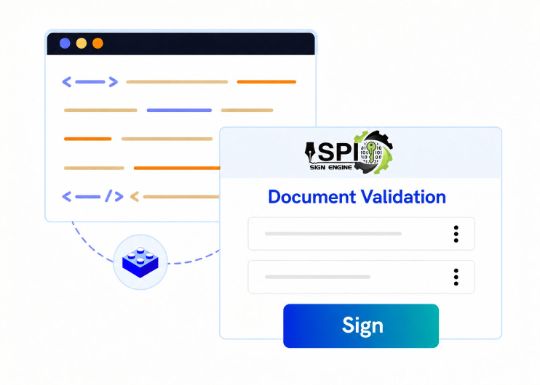
Fully documented REST API for embedding signature workflows directly into any CRM, ERP, DMS, or custom application. Sandbox access available. Designed for a seamless integration of the signature in your workflows.
SPI-S v3.2 supports multiple signing modes: remote signing flows (email link, OTP, mobile) as well as signing with a cryptographic key stored on a secure device such as a QSCD (Qualified Signature Creation Device: smart card, cryptographic token, or equivalent). Adaptable to your business process without rebuilding it.
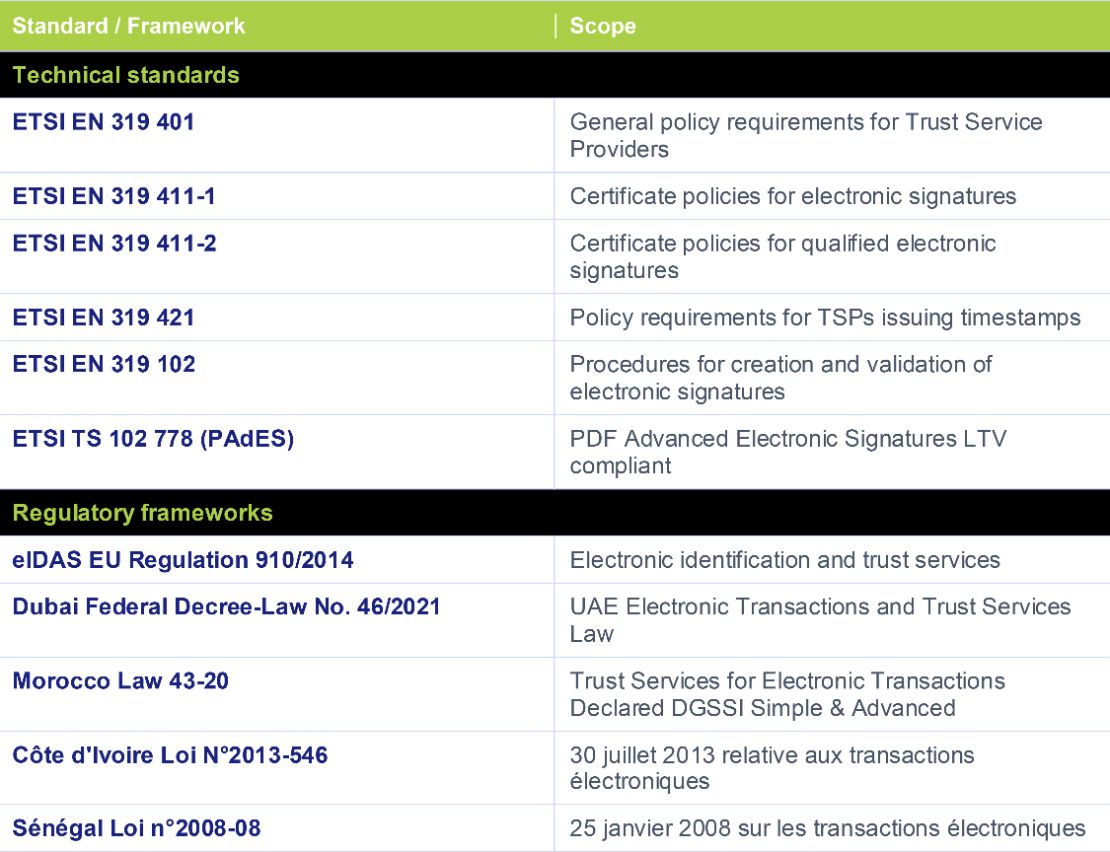
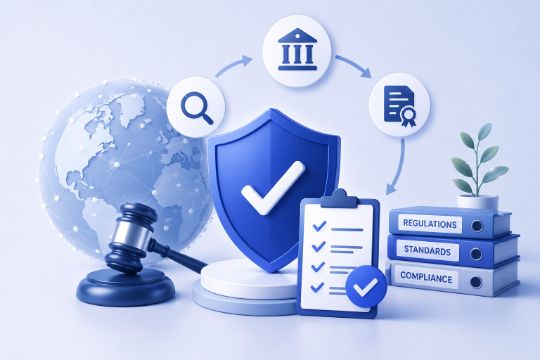
A Compliance Posture built on documented proof
One Deployment Model.
Full Control.
This is not a limitation. It is a deliberate choice, made for organizations that operate in regulated sectors where data sovereignty is not optional.
Who this is for
Banks, insurance companies, government agencies, ministries, trust service providers, and any organization that requires airtight legal validity, complete data sovereignty, and a signature infrastructure built to last.
Recognized under the laws that matter
United Arab Emirates : Federal Decree-Law No. 46 of 2021
The UAE Electronic Transactions and Trust Services Law establishes legal equivalence for electronic signatures when backed by qualified certificates from recognized trust service providers. SPI-S v3.2 PKI architecture and ETSI-compliant certificate policies align with the technical requirements outlined under this framework, enabling legally binding signatures for contracts and transactions under UAE law.
European Union : eIDAS Regulation (EU 1183/2024)
eIDAS defines three levels of electronic signature (Simple, Advanced, and Qualified) and establishes cross-border legal recognition across EU member states. The solution implements all three levels in full accordance with ETSI EN 319 standards. Our team's two decades of eIDAS-compliant platform deployment means no interpretation gap between the regulation and the implementation.
Morocco : Law 43-20
Morocco's Law 43-20 on Trust Services for Electronic Transactions, modeled after eIDAS, establishes the regulatory framework for electronic signatures in the Kingdom. The platform is declared by DGSSI at the Simple and Advanced levels. Qualified level accreditation is underway and represents the highest level of legal recognition under Moroccan law.
Africa : Côte d'Ivoire & Senegal
In Côte d'Ivoire and Senegal, the team has been directly involved in PKI deployments and has worked alongside local regulatory bodies as they developed their electronic trust frameworks. SPI-S platform architecture is built to support trust service provider qualification in each of these jurisdictions, providing a ready-made path to local compliance for regional operators.
Where SPI-S is deployed today

Banking & Finance
Account opening, loan agreements, internal approvals. Integrated with core banking systems via API

Government & Public sector
Administrative documents, PKI infrastructure, citizen identity services

Legal & Compliance
Contracts, deeds, regulatory filings. Every signature carries full evidential weight

Corporate HR & Procurement
Employment contracts, supplier agreements, purchase orders

Healthcare
Patient consent forms, medical records, insurance claims

Real Estate
Preliminary sale agreements, lease contracts, property mandates

Insurance
Policy subscriptions, claims processing, broker agreements

Cross-border Transactions
Multi-jurisdiction document execution, recognized across eIDAS-aligned jurisdictions
Our expertise at your service
-
Compliance with the strictest international standards such as TDRA, the eIDAS Regulation, etc.
-
Training, planning, and monitoring adapted to your security objectives


Copyright 2026, RNTrust Group. All Rights Reserved.